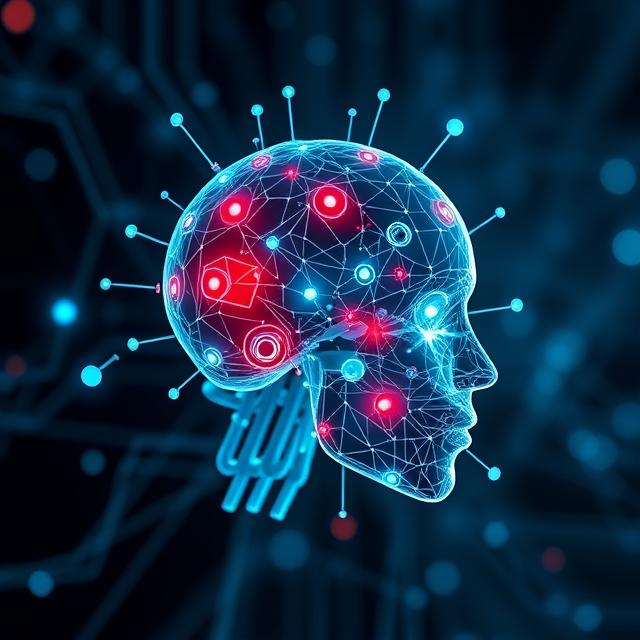

Artificial intelligence (AI) has rapidly emerged as a transformative force across various sectors, and its impact on healthcare is particularly profound. In the realm of medicine, AI refers to the simulation of human intelligence processes by machines, especially computer systems. These processes include learning (the acquisition of information and rules for using the information), reasoning (using the rules to reach approximate or definite conclusions), and self-correction.
The integration of AI in healthcare promises to revolutionize patient care and streamline medical practices. From predictive analytics that forecast disease outbreaks to personalized treatment plans based on individual genetic profiles, AI applications are vast and varied. For instance, machine learning algorithms can analyze complex medical data much faster than any human could, identifying patterns that might lead to new insights about diseases and treatments. Robotics and AI-driven devices assist surgeons in performing delicate operations with precision that was previously unattainable, reducing risks and improving outcomes.
Moreover, AI enhances diagnostic accuracy significantly. Tools like IBM Watson Health demonstrate AI’s potential by aiding doctors in diagnosing diseases such as cancer more accurately and swiftly. AI systems can process and cross-reference millions of medical records, research papers, and clinical guidelines to provide evidence-based treatment recommendations.
Given the rapid advancements and significant benefits, understanding AI in healthcare is not just beneficial but essential for today’s healthcare professionals. This knowledge equips them with the skills to leverage AI tools effectively, ensuring they remain at the forefront of medical innovation. As AI continues to evolve, it will increasingly dictate future directions in healthcare delivery, making education in this field critical for anyone involved in patient care or medical research. Thus, accessing comprehensive courses on AI in healthcare becomes not only an educational pursuit but a necessary step towards maintaining competency and excellence in the medical profession.
The Growing Demand for AI Education in Healthcare
As artificial intelligence continues to reshape the landscape of healthcare, the demand for specialized education in this domain is skyrocketing. Healthcare professionals, from clinicians to administrators, recognize that understanding AI is no longer optional but essential for those who wish to maintain a competitive edge and enhance patient care. This surge in interest is driven by AI’s proven capabilities to improve diagnostic accuracy, optimize treatment plans, and manage healthcare resources more efficiently. Consequently, educational institutions and online platforms have responded by developing a plethora of courses focused on AI in healthcare, many of which are offered free of charge.
These free courses cater to a wide audience, including medical students, practicing physicians, nurses, and even IT professionals working within the healthcare sector. They aim to demystify AI technologies and demonstrate practical applications in everyday medical scenarios. For example, courses might cover how machine learning models predict patient admissions or how natural language processing aids in interpreting complex medical records. By providing foundational knowledge and hands-on experience, these courses empower healthcare workers to integrate AI solutions into their workflows, thereby enhancing efficiency and patient outcomes.
Moreover, the accessibility of free AI courses democratizes learning, allowing individuals from diverse backgrounds and financial situations to gain valuable insights into cutting-edge technologies. This inclusivity fosters a more informed healthcare workforce capable of driving innovation and adapting to technological advancements. As these courses often include real-world case studies and problem-solving exercises, participants not only learn theoretical aspects but also acquire practical skills applicable in clinical settings.
In summary, the proliferation of free AI courses in healthcare reflects a broader trend toward lifelong learning and professional development in the medical field. By equipping healthcare providers with the necessary skills to harness AI, these courses play a crucial role in shaping a future where technology and human expertise coalesce to deliver superior healthcare services. The increasing enrollment rates in these courses underscore a collective acknowledgment of AI’s pivotal role in modern medicine, highlighting an urgent need for continuous education in this area.
Top Free Online Courses on AI in Healthcare
Navigating the vast array of free online courses available on artificial intelligence in healthcare can be daunting. However, several standout options offer comprehensive curricula and high-quality instruction, making them ideal for learners at various stages of their educational journey. Below, we explore three top-tier courses that exemplify excellence in content, structure, and instructor expertise.
1. Stanford University’s “AI in Healthcare” Course
Stanford University offers a robust course titled “AI in Healthcare,” available through Coursera. This course is designed for both beginners and intermediate learners who seek to understand how AI technologies are applied across different facets of healthcare. The curriculum covers key topics such as the use of AI in diagnostics, personalized medicine, and operational improvements in healthcare facilities. What sets this course apart is its structured approach; it begins with foundational concepts of AI and gradually builds up to complex applications in real-world medical scenarios. The instructors, Dr. Andrew Ng and Dr. Pranav Rajpurkar, are renowned experts in the field of AI, bringing both academic rigor and practical insights to the course material. Their engaging teaching style and use of case studies make complex concepts accessible and applicable.
2. edX’s “Introduction to Artificial Intelligence in Healthcare”
Another exceptional option is the “Introduction to Artificial Intelligence in Healthcare” course offered by edX, in collaboration with the University of Texas at Austin. This course is tailored for those new to AI, providing a gentle introduction to the fundamental principles of AI and their applications in healthcare. It delves into how AI can enhance patient care through improved diagnostics and treatment protocols. The course is structured into modules that each tackle a specific aspect of AI in healthcare, such as imaging analysis and robotic surgery assistance. The instructors, led by Dr. David J. Bruton Jr., bring a wealth of experience from both academia and industry, enriching the course with practical examples and innovative insights. The interactive elements, including quizzes and discussion forums, foster a dynamic learning environment that encourages active participation.
3. FutureLearn’s “AI for Healthcare: Equipping the Workforce for Digital Transformation”
FutureLearn offers a unique course titled “AI for Healthcare: Equipping the Workforce for Digital Transformation,” developed by the University of Manchester. This course stands out for its focus on preparing healthcare professionals for the digital transformation brought about by AI. It covers a broad range of topics, from ethical considerations in AI deployment to the technical aspects of integrating AI tools into existing healthcare systems. The course is particularly praised for its emphasis on the socio-technical perspective, addressing not only how AI works technically but also how it impacts healthcare policy and practice. The lead instructor, Professor John Ainsworth, along with a team of experienced educators, ensures that the course remains relevant and engaging by incorporating current trends and challenges in healthcare AI. Participants benefit from a blend of video lectures, reading materials, and peer-to-peer discussions, which collectively deepen their understanding of AI’s transformative potential in healthcare.
Each of these courses not only provides a rich learning experience but also equips participants with practical skills and insights that can be directly applied in their professional environments. Whether you are a healthcare practitioner looking to stay updated with the latest technologies or an IT professional aiming to pivot into the healthcare sector, these courses offer invaluable resources to enhance your career trajectory in the age of AI.
Advantages of Enrolling in Free AI Healthcare Courses
Enrolling in free artificial intelligence (AI) courses specifically tailored for healthcare offers numerous advantages, primarily centered around accessibility, cost-effectiveness, and the opportunity to engage with a global community of learners. These benefits make such courses an attractive option for professionals seeking to expand their knowledge and skills without financial barriers.
Firstly, the accessibility of free AI healthcare courses cannot be overstated. Unlike traditional education programs, which often require physical attendance and adherence to rigid schedules, these online courses are available anytime and anywhere. This flexibility allows healthcare professionals worldwide to learn at their own pace and convenience, fitting education around their busy schedules. Whether you are a doctor in a remote clinic or a nurse managing night shifts, these courses accommodate your lifestyle, breaking down geographical and temporal barriers.
Cost-effectiveness is another significant advantage. Traditional education can be prohibitively expensive, with costs covering tuition, textbooks, and commuting. Free AI courses eliminate these expenses, democratizing access to high-quality education. This is particularly beneficial for individuals in low-income countries or those facing economic constraints, enabling them to acquire essential skills without financial strain. Moreover, the elimination of costs encourages more people to explore AI in healthcare, potentially leading to a more tech-savvy global healthcare workforce.
Furthermore, these courses facilitate networking and interaction with a diverse global community. Participants come from various backgrounds and locations, creating a rich melting pot of perspectives and experiences. Discussion forums and group projects allow learners to collaborate, share insights, and solve problems together, mimicking real-world teamwork scenarios in healthcare settings. Such interactions not only enhance learning outcomes but also build professional relationships that could lead to future collaborations and opportunities.
Additionally, the structure of these courses often includes assessments and certifications upon completion, which can be showcased on professional platforms like LinkedIn. These certifications serve as a testament to the learner’s commitment and newly acquired skills, potentially opening doors to career advancements or transitions within the healthcare sector. Employers increasingly value candidates who show initiative in self-improvement and staying abreast of technological advancements, making these certifications a valuable asset.
In summary, free AI courses in healthcare provide unparalleled accessibility, eliminate financial barriers, and offer a platform for global interaction and certification. These advantages make them an excellent choice for healthcare professionals eager to enhance their capabilities and adapt to the evolving demands of their field.
Challenges and Limitations of Free AI Healthcare Courses
While free AI courses in healthcare present numerous benefits, they are not without their challenges and limitations. One of the primary concerns is the variability in course quality and depth. Since these courses are often provided by different institutions and organizations, there is a significant disparity in the level of detail and the rigor of the content. Some courses may offer only superficial overviews, lacking the comprehensive exploration needed for a deep understanding of AI applications in healthcare. This inconsistency can leave learners with gaps in their knowledge, which might hinder their ability to apply AI techniques effectively in real-world medical scenarios.
Another significant challenge is the lack of personalized support and mentorship. Unlike paid programs that often include one-on-one tutoring or small group sessions, free courses typically rely on pre-recorded lectures and automated assessments. This setup limits direct interaction between instructors and students, making it difficult for learners to receive feedback on their progress or clarification on complex topics. The absence of personalized guidance can impede deeper learning and skill acquisition, particularly for those who are new to AI or who struggle with self-directed study.
Moreover, the credibility and recognition of free courses can sometimes be questionable. While some courses are offered by prestigious universities or recognized organizations, others may come from less reputable sources. This variation affects how these courses are perceived by employers and professional bodies. Certificates from lesser-known providers might not hold the same weight in the job market, potentially diminishing the value of the education received. Additionally, the absence of accreditation in many free courses means that the skills and knowledge gained may not always align with industry standards or requirements.
Finally, free AI courses often lack updates and ongoing support. The field of AI is rapidly evolving, with new technologies and methodologies emerging regularly. Without regular updates, course content can quickly become outdated, failing to equip learners with the most current knowledge and skills. Furthermore, the lack of ongoing support means that once a course is completed, learners have limited resources to continue their education or address new questions that arise as they apply their learning in professional settings.
In conclusion, while free AI courses in healthcare democratize access to important knowledge, they come with notable challenges related to quality, support, recognition, and relevance. Prospective learners should carefully evaluate these factors when choosing a course, ensuring that their educational investment meets their professional needs and expectations.
Success Stories: Transformative Impacts of AI Healthcare Courses
The real-world impact of free AI courses in healthcare is best illustrated through success stories of individuals who have leveraged these educational resources to advance their careers and innovate within the medical field. Consider the case of Dr. Emily Carter, a general practitioner in a rural town in Australia. Before enrolling in a free AI in healthcare course offered by Stanford University, Dr. Carter faced challenges in accessing timely diagnostic support for her patients due to geographic isolation. Through the course, she learned to implement AI-driven diagnostic tools that allowed her to interpret radiology images with unprecedented speed and accuracy. This not only improved her diagnostic capabilities but also enhanced patient outcomes, reducing unnecessary referrals and wait times for specialist opinions.
Another compelling story comes from Rajiv Patel, a healthcare IT specialist based in India. After completing a series of free AI courses on edX, Patel spearheaded a project at his hospital to integrate AI into patient management systems. His initiative resulted in a 30% reduction in administrative workload, freeing up staff to focus more on patient care rather than paperwork. The AI system he helped implement was particularly effective in predicting patient admissions and optimizing resource allocation, demonstrating a tangible improvement in operational efficiency and patient satisfaction.
Furthermore, the story of Maria Gonzalez, a nurse practitioner from Spain, highlights how AI education can inspire innovations in patient care. After taking a FutureLearn course on AI in healthcare, Gonzalez developed an AI application that assists in monitoring chronic disease patients remotely. Her app uses machine learning to analyze patient data in real-time, alerting healthcare providers to potential health issues before they become critical. This proactive approach has been instrumental in managing chronic conditions more effectively, significantly improving the quality of life for her patients and reducing emergency admissions.
These narratives underscore the transformative potential of free AI courses in healthcare. By equipping professionals with the necessary skills and knowledge, these courses not only enhance individual career prospects but also contribute to systemic improvements in healthcare delivery. Each story serves as a testament to the power of accessible education in fostering innovation and excellence in the medical field, encouraging more healthcare professionals to embark on similar educational journeys.
Embracing the Future of Healthcare with AI Education
In conclusion, the integration of artificial intelligence into healthcare represents a pivotal advancement in medical science, offering unprecedented opportunities for enhancing patient care and operational efficiencies. As highlighted throughout this article, free AI courses in healthcare are not merely educational tools but essential instruments for professional development and innovation. These courses democratize access to cutting-edge knowledge, enabling healthcare professionals worldwide to harness the power of AI regardless of their financial or geographic constraints.
The importance of pursuing such courses cannot be overstated. As AI continues to evolve and permeate various aspects of healthcare, staying informed and skilled in AI applications is crucial for all healthcare practitioners. Engaging in AI education empowers professionals to not only keep pace with technological advancements but also to actively contribute to the transformation of healthcare practices. By understanding and implementing AI solutions, healthcare providers can significantly improve diagnostic accuracy, personalize treatment plans, and optimize resource management, ultimately leading to better patient outcomes.
Therefore, I strongly encourage readers to consider enrolling in a free AI course in healthcare. Whether you are a seasoned medical professional or new to the field, these courses offer invaluable insights and practical skills that are highly applicable in today’s tech-driven medical environment. By committing to this educational journey, you are not only investing in your personal growth but also contributing to the broader evolution of healthcare. Let us embrace these opportunities to learn and innovate, paving the way for a future where technology and human expertise converge to redefine the essence of patient care.