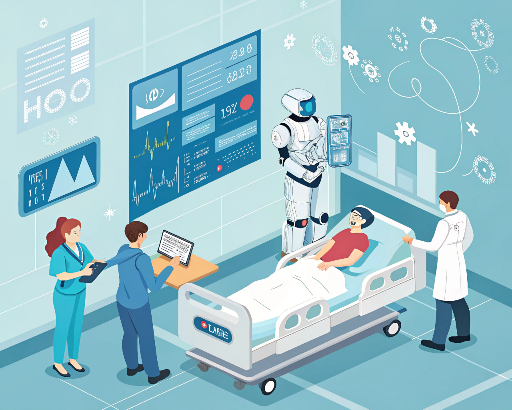
The Transformative Role of Artificial Intelligence in Healthcare

Artificial intelligence (AI) has emerged as one of the most transformative technologies of the 21st century, revolutionizing industries across the globe. Nowhere is this impact more profound than in healthcare, where AI applications are redefining how medical services are delivered, enhancing patient outcomes, and addressing longstanding challenges within the sector. In recent years, the integration of AI into healthcare has accelerated at an unprecedented pace, driven by advancements in machine learning, data analytics, and computational power. This rapid growth underscores a fundamental shift in the way healthcare providers approach diagnosis, treatment, and patient care.
At its core, AI refers to systems or machines that mimic human intelligence to perform tasks such as analyzing complex datasets, recognizing patterns, and making decisions with minimal human intervention. In healthcare, these capabilities are being harnessed to tackle some of the industry’s most pressing challenges, from improving diagnostic accuracy to streamlining administrative processes. For instance, AI-powered tools are now capable of detecting diseases like cancer and heart conditions earlier and with greater precision than traditional methods. Similarly, predictive analytics powered by AI can forecast patient deterioration, enabling proactive interventions that save lives and reduce hospital readmissions.

The significance of AI in healthcare extends beyond individual patient care. It also plays a critical role in optimizing operational efficiency, reducing costs, and addressing workforce shortages. By automating routine tasks, AI allows healthcare professionals to focus on higher-value activities, ultimately improving the quality of care. Furthermore, AI facilitates personalized medicine, tailoring treatments to individual patients based on their unique genetic profiles and health histories. These advancements not only enhance clinical decision-making but also empower patients to take a more active role in managing their health.
As AI continues to evolve, its potential to transform healthcare grows exponentially. From drug discovery to telemedicine, the applications of AI are vast and varied, promising to address some of the most complex issues facing the healthcare industry today. However, this rapid adoption also raises important questions about ethics, data privacy, and regulatory oversight—issues that must be carefully navigated to ensure the responsible and equitable deployment of AI technologies. As we delve deeper into the key drivers behind the rapid growth of AI in healthcare, it becomes clear that this technological revolution is reshaping the very foundations of modern medicine, offering new opportunities to improve health outcomes on a global scale.
Technological Advancements Fueling AI Growth in Healthcare
The rapid proliferation of artificial intelligence in healthcare owes much to significant breakthroughs in underlying technologies. Among these, machine learning stands out as a primary catalyst, enabling computers to learn from vast datasets without explicit programming. Modern machine learning algorithms, particularly deep learning models, have demonstrated remarkable proficiency in analyzing complex medical data such as imaging scans, genetic sequences, and electronic health records. Convolutional Neural Networks (CNNs), for instance, have achieved diagnostic accuracy in radiology that rivals or even surpasses human experts, while Recurrent Neural Networks (RNNs) excel in processing sequential data like patient monitoring signals.
Natural language processing (NLP) represents another crucial advancement driving AI adoption in healthcare. Recent developments in transformer-based models, such as BERT and GPT, have dramatically improved the ability of AI systems to understand and generate human-like text. This capability has transformed how medical professionals interact with documentation systems, enabling voice-to-text transcription, automated medical coding, and intelligent summarization of clinical notes. NLP-powered chatbots and virtual assistants now handle millions of patient inquiries daily, providing accurate information and triage support while freeing up valuable clinical resources.
The exponential increase in computing power has been equally instrumental in advancing AI capabilities. Graphics Processing Units (GPUs) and Tensor Processing Units (TPUs) have evolved to handle massive parallel computations required for training sophisticated AI models. Cloud computing platforms have further democratized access to high-performance computing resources, allowing healthcare organizations of all sizes to deploy AI solutions without substantial upfront investment. Quantum computing research, though still in its early stages, promises to bring about another quantum leap in processing capabilities, potentially solving optimization problems in drug discovery and genomics that were previously computationally infeasible.
Data storage and management innovations have created the necessary infrastructure to support AI development in healthcare. Distributed database systems and advanced data compression techniques enable efficient handling of petabytes of medical data generated daily. Blockchain technology is emerging as a solution for secure, decentralized medical record management, while federated learning approaches allow institutions to collaboratively train AI models without sharing sensitive patient data. These technological foundations have created an ecosystem where AI can thrive, processing and learning from diverse medical data sources to deliver increasingly sophisticated healthcare solutions.
The Data Revolution: Unlocking AI’s Potential in Healthcare
The unprecedented availability of healthcare data has become a cornerstone for AI’s rapid advancement in the medical field. Electronic Health Records (EHRs), once siloed in proprietary systems, are now increasingly standardized and interoperable, creating vast repositories of structured patient information. These digital records contain comprehensive longitudinal data including medical history, laboratory results, medication lists, and clinical notes, providing AI systems with rich contextual information for analysis and pattern recognition. The implementation of Fast Healthcare Interoperability Resources (FHIR) standards has further enhanced data accessibility, enabling seamless exchange of information between different healthcare systems and facilitating more robust AI applications.
Medical imaging represents another critical data source driving AI innovation in healthcare. The digitization of radiological images through Picture Archiving and Communication Systems (PACS) has created enormous datasets of X-rays, CT scans, MRIs, and ultrasound images. These visual data repositories, when coupled with associated diagnostic information, serve as powerful training sets for computer vision algorithms. The standardization of imaging protocols and the widespread adoption of DICOM (Digital Imaging and Communications in Medicine) formats have ensured consistency across datasets, significantly improving the reliability of AI-driven image analysis systems.
Genomic data has emerged as a particularly transformative resource in precision medicine applications of AI. Next-generation sequencing technologies have dramatically reduced the cost and time required for whole-genome sequencing, generating massive amounts of genetic information that AI systems can analyze to identify disease markers and predict treatment responses. The integration of genomic data with clinical information in biobanks and research databases has created multidimensional datasets that power sophisticated AI models for personalized medicine and drug discovery.
The proliferation of wearable devices and remote monitoring technologies has opened new frontiers in continuous health data collection. Smartwatches, fitness trackers, and medical-grade wearables generate real-time physiological data streams, including heart rate, activity levels, sleep patterns, and blood oxygen saturation. This constant flow of personal health information, when combined with environmental and lifestyle data, provides AI systems with dynamic datasets that enable early detection of health issues and personalized health recommendations. The Internet of Medical Things (IoMT) ecosystem further expands data collection capabilities through connected medical devices and home health equipment.
Clinical trial data and research publications have also become increasingly accessible through open-access initiatives and collaborative research networks. Machine-readable scientific literature and structured clinical trial databases provide AI systems with evidence-based knowledge that enhances their decision-making capabilities. The combination of these diverse data sources creates a comprehensive foundation for developing AI applications that can draw insights from multiple dimensions of health information, leading to more accurate diagnoses, better treatment planning, and improved patient outcomes.
Financial Imperatives Driving AI Adoption in Healthcare
The financial landscape of healthcare presents compelling incentives for the rapid adoption of artificial intelligence technologies. Healthcare systems worldwide face mounting pressure to control costs while maintaining or improving quality of care, a challenge that AI is uniquely positioned to address. The US healthcare system alone spends approximately $4 trillion annually, with administrative expenses accounting for nearly 30% of total healthcare costs. AI-powered automation solutions have demonstrated remarkable efficiency in streamlining administrative processes, including claims processing, billing, and scheduling, potentially saving billions of dollars annually. Natural language processing systems can automatically extract relevant information from medical records for billing purposes, reducing errors and minimizing manual labor requirements.
Investment in AI healthcare solutions has surged dramatically, reflecting strong confidence in their financial viability. Venture capital funding for AI healthcare startups reached record levels in recent years, with over $15 billion invested globally in 2022 alone. Major pharmaceutical companies and healthcare organizations are making substantial investments in AI research and development, viewing these technologies as essential for maintaining competitive advantage. The return on investment (ROI) for AI implementations has proven particularly attractive, with studies showing cost reductions of 10-30% in various clinical and operational areas. For instance, AI-driven predictive analytics can optimize hospital resource allocation, reducing unnecessary admissions and shortening length of stay, which translates directly to significant cost savings.
The economic benefits of AI extend beyond operational efficiencies to encompass improved clinical outcomes, which carry substantial financial implications. Preventive care powered by AI can detect diseases earlier, when treatment is typically less expensive and more effective. Machine learning algorithms that predict patient deterioration can trigger timely interventions, preventing costly complications and emergency room visits. Insurance companies are increasingly recognizing these advantages, incorporating AI-driven risk assessment tools into their underwriting processes and offering premium discounts for policyholders who use AI-enabled preventive care solutions.
Healthcare providers are also leveraging AI to address workforce shortages and rising labor costs. Intelligent automation systems can handle routine tasks such as patient triage, appointment scheduling, and medication reminders, allowing human staff to focus on more complex cases. Virtual nursing assistants powered by AI can monitor patients remotely, reducing the need for in-person visits and lowering overall care delivery costs. These applications not only generate direct savings but also enhance productivity and patient satisfaction, creating additional value for healthcare organizations.
The scalability of AI solutions presents another significant financial advantage. Unlike traditional medical technologies that require substantial physical infrastructure and personnel to operate, many AI applications can be deployed across multiple locations with minimal marginal costs. Cloud-based AI platforms enable smaller healthcare facilities to access sophisticated diagnostic tools and decision support systems that were previously available only to large medical centers. This democratization of advanced healthcare technologies helps level the playing field while distributing costs more efficiently across the healthcare ecosystem.
Regulatory Frameworks and Policy Support Accelerating AI Integration
Government policies and regulatory frameworks have played a pivotal role in accelerating the adoption of artificial intelligence in healthcare. Recognizing AI’s transformative potential, numerous countries have established dedicated initiatives to promote its development and deployment in medical applications. The US Food and Drug Administration (FDA) has implemented an innovative regulatory pathway specifically for AI and machine learning-based medical devices, introducing the Software as a Medical Device (SaMD) framework. This adaptive regulatory approach allows for continuous learning and improvement of AI systems post-deployment, addressing the unique characteristics of these evolving technologies while maintaining rigorous safety standards.
Global regulatory harmonization efforts have further facilitated AI adoption in healthcare. The International Medical Device Regulators Forum (IMDRF) has developed international guidelines for AI medical devices, establishing common principles for risk classification, validation requirements, and performance monitoring. These standardized regulations help streamline market entry for AI healthcare solutions across multiple jurisdictions, encouraging innovation while ensuring patient safety. The European Union’s Medical Devices Regulation (MDR) includes specific provisions for AI-based technologies, balancing innovation promotion with robust safety assessments.
Government funding and public-private partnerships have significantly bolstered AI development in healthcare. The National Institutes of Health (NIH) launched the Bridge to Artificial Intelligence (Bridge2AI) program, investing hundreds of millions of dollars in AI research infrastructure and data generation projects. Similar initiatives exist in other countries, including China’s New Generation Artificial Intelligence Development Plan and the European Union’s Horizon Europe program, which allocate substantial resources to AI healthcare research. These government-backed programs create ecosystems where academia, industry, and healthcare providers collaborate to advance AI applications.
Policy frameworks supporting data sharing and interoperability have removed significant barriers to AI development in healthcare. The 21st Century Cures Act in the United States mandates the adoption of open APIs for health information exchange, facilitating access to data for AI research while protecting patient privacy. Similar legislation in other regions, along with standardized data formats and interoperability requirements, has created the necessary infrastructure for developing robust AI systems. Governments have also established ethical guidelines for AI in healthcare, addressing concerns about bias, transparency, and accountability while promoting responsible innovation.
Addressing Workforce Challenges Through AI Solutions
The healthcare industry faces unprecedented workforce challenges, with projections indicating a global shortage of 18 million health workers by 2030. Artificial intelligence emerges as a critical solution to these staffing constraints, offering innovative ways to augment human capabilities and optimize resource allocation. AI-powered diagnostic tools and decision support systems are increasingly filling gaps in specialized expertise, particularly in underserved areas. For instance, AI image analysis platforms enable general practitioners to achieve specialist-level accuracy in interpreting radiological scans, effectively extending the reach of scarce radiological expertise to remote locations. This technological augmentation not only improves access to specialized care but also enables existing healthcare professionals to manage larger patient loads without compromising quality.
AI applications are transforming workflow efficiency across healthcare settings, directly addressing workforce limitations. Intelligent scheduling systems optimize staff assignments based on predicted patient demand, skill requirements, and historical data patterns. These systems can dynamically adjust staffing levels in real-time, ensuring appropriate coverage during peak periods while avoiding overstaffing during slower times. Virtual nursing assistants and AI-powered chatbots handle routine patient inquiries, medication reminders, and follow-up communications, freeing clinical staff to focus on more complex patient care needs. In hospitals, AI-driven bed management systems coordinate patient flow, reducing bottlenecks and improving throughput without increasing staffing levels.
The integration of AI in medical education and training addresses long-term workforce development challenges. Adaptive learning platforms powered by AI customize educational content for medical students and practicing professionals, accelerating skill acquisition and maintaining competency in rapidly evolving fields. Simulation environments enhanced by AI provide realistic training scenarios that would otherwise require extensive faculty supervision and resources. Additionally, AI systems facilitate knowledge transfer from experienced practitioners to newer generations of healthcare workers through automated case analysis and treatment protocol recommendations, helping maintain institutional expertise despite workforce turnover.
Remote patient monitoring solutions enabled by AI significantly extend the capacity of healthcare teams. Wearable devices and home health monitoring systems continuously collect vital signs and alert clinicians to concerning trends, allowing single providers to safely manage larger panels of patients with chronic conditions. AI algorithms prioritize alerts based on severity and likelihood of adverse events, ensuring that limited human resources focus on the most urgent cases. This technological support enables healthcare organizations to maintain high standards of care despite workforce shortages, particularly in specialties experiencing acute staffing pressures.
Enhancing Patient Outcomes Through AI-Powered Innovations
The ultimate measure of artificial intelligence’s impact in healthcare lies in its ability to meaningfully improve patient outcomes across various dimensions of care. AI applications are demonstrating remarkable success in enhancing diagnostic accuracy, with machine learning algorithms achieving sensitivity and specificity rates that often exceed human performance. In oncology, for instance, AI systems have shown 95% accuracy in detecting breast cancer from mammograms, reducing false positives by 5.7% and false negatives by 9.4% compared to traditional screening methods. These improvements in early detection translate directly to better survival rates and reduced treatment costs, fundamentally altering the trajectory of patient care.
Personalized treatment planning represents another significant advancement enabled by AI. Predictive analytics platforms integrate multiple data sources—including genomic information, clinical history, and real-time biomarkers—to recommend tailored therapeutic approaches. In diabetes management, AI-powered systems analyze continuous glucose monitoring data alongside lifestyle factors to optimize insulin dosing and dietary recommendations, resulting in improved glycemic control and reduced complication rates. Similarly, AI-driven precision oncology platforms match patients with targeted therapies based on tumor molecular profiles, doubling response rates in certain cancer types compared to standard treatment protocols.
Patient engagement and adherence have seen dramatic improvements through AI-enhanced care models. Intelligent health coaching apps leverage behavioral science and machine learning to deliver personalized motivation and support, achieving medication adherence rates exceeding 80% in chronic disease management programs. Virtual reality therapy platforms powered by AI provide immersive rehabilitation experiences that accelerate recovery times and improve functional outcomes, particularly in stroke and trauma rehabilitation. Remote monitoring systems equipped with AI analytics enable early intervention in deteriorating conditions, reducing hospital readmission rates by up to 40% in high-risk populations.
The integration of AI in surgical procedures exemplifies how technology can enhance procedural outcomes while minimizing risks. Robotic-assisted surgery systems guided by AI algorithms demonstrate superior precision in complex operations, reducing operative times by 20-30% and complication rates by 40%. Post-operative recovery is similarly optimized through AI-driven pain management protocols and mobility tracking systems that adapt treatment plans based on individual progress metrics. These technological advancements not only improve immediate surgical outcomes but also contribute to better long-term recovery trajectories and quality of life for patients.
Ethical Considerations and Future Directions in AI Healthcare
While the integration of artificial intelligence in healthcare offers unprecedented opportunities for advancement, it also raises critical ethical considerations that must be addressed to ensure responsible development and deployment. The potential for algorithmic bias remains a significant concern, as AI systems trained on non-representative datasets may perpetuate or exacerbate existing health disparities. For instance, facial recognition algorithms used in healthcare settings have demonstrated lower accuracy rates for patients with darker skin tones, potentially leading to unequal treatment outcomes. To mitigate these risks, researchers and developers must prioritize diversity in training data and implement rigorous bias detection mechanisms throughout the AI lifecycle.
Data privacy and security present another formidable challenge in the age of AI-driven healthcare. The aggregation of sensitive patient information from multiple sources creates attractive targets for cyber threats, while the complexity of AI systems complicates traditional data protection measures. Differential privacy techniques and federated learning approaches offer promising solutions, enabling AI model training without compromising individual patient data. However, these technical safeguards must be complemented by robust legal frameworks and transparent data governance policies to maintain public trust.
The future trajectory of AI in healthcare will likely see increased emphasis on explainability and interpretability of AI decisions. Clinicians and patients alike require clear understanding of how AI systems arrive at their recommendations, particularly in life-critical situations. Emerging research in interpretable machine learning aims to develop AI models that provide transparent reasoning paths, bridging the gap between complex algorithms and human comprehension. This evolution toward explainable AI will be crucial for widespread clinical adoption and regulatory approval of increasingly sophisticated healthcare applications.
Looking ahead, the convergence of AI with other emerging technologies promises to unlock new possibilities in healthcare delivery. Quantum computing could revolutionize drug discovery and genome analysis by solving complex optimization problems currently beyond classical computing capabilities. The integration of AI with extended reality technologies may transform medical education and patient rehabilitation, creating immersive learning and treatment environments. Meanwhile, advances in edge computing will enable real-time AI processing at the point of care, facilitating immediate clinical decision support and reducing latency in critical care scenarios.
The societal implications of AI in healthcare extend beyond technical considerations to encompass broader questions of equity and access. While AI has the potential to democratize healthcare by extending expert-level care to underserved regions, there is a risk that these technologies could widen existing health disparities if not implemented thoughtfully. Ensuring equitable access to AI-powered healthcare solutions will require coordinated efforts from policymakers, healthcare providers, and technology developers to address infrastructure limitations and digital literacy gaps in vulnerable communities. As AI continues to evolve, maintaining a balance between innovation and ethical responsibility will remain paramount in shaping a healthcare future that serves all patients equitably and effectively.
Conclusion: Charting the Course for AI’s Healthcare Evolution
The rapid growth of artificial intelligence in healthcare represents a paradigm shift in medical practice, driven by a confluence of technological, financial, regulatory, and workforce-related factors. As this analysis demonstrates, the integration of AI into healthcare systems is not merely a technological upgrade but a fundamental transformation in how medical services are conceptualized and delivered. The synergy between advanced machine learning algorithms, abundant healthcare data, supportive regulatory frameworks, and pressing economic imperatives has created an environment where AI innovation flourishes, delivering tangible improvements in patient care while addressing systemic challenges within the healthcare industry.
Looking forward, the continued evolution of AI in healthcare will depend on maintaining this delicate balance between technological advancement and ethical responsibility. Key priorities include developing more robust methods for detecting and mitigating algorithmic bias, establishing universal standards for AI explainability in clinical settings, and creating sustainable models for equitable access to AI-powered healthcare solutions. The integration of emerging technologies such as quantum computing and extended reality with existing AI capabilities promises to push the boundaries of what is possible in medical diagnosis, treatment, and patient care, while simultaneously presenting new challenges in terms of regulation and ethical oversight.
The healthcare industry must embrace a collaborative approach to AI development, bringing together technologists, clinicians, ethicists, and policymakers to navigate the complex landscape of AI integration. This multidisciplinary cooperation will be essential in addressing both the technical challenges of implementing AI systems and the broader societal implications of their deployment. As AI continues to reshape healthcare delivery, maintaining a steadfast commitment to patient-centered innovation, ethical integrity, and equitable access will be crucial in realizing the full potential of this transformative technology while safeguarding the fundamental values of medical practice.